
Invisalign vs Braces: Cost, Timeline, and Does It Hurt?
You want straighter teeth, and you're stuck between clear aligners and metal brackets. The Invisalign vs braces decision comes down to three things people actually care about: what it costs, how long you're stuck in treatment, and how much it's going to hurt. Most comparison pages bury those answers under a feature list, so this one puts them first: real 2026 pricing for both, treatment timelines that aren't sugar-coated, and a straight answer on pain, including the question people quietly Google at midnight: does Invisalign hurt?
Which one wins depends on your teeth, your schedule, and how much discomfort you'll tolerate.
Braces Cost vs Invisalign Cost
Money is the first filter for most people, so start there.
In 2026, traditional metal braces typically cost $3,000 to $7,000, while Invisalign runs $4,500 to $8,000, with San Francisco sitting at the upper end of both ranges. The headline takeaway: braces are usually a bit cheaper upfront, but the gap has narrowed dramatically over the past few years.
| Factor | Braces | Invisalign |
|---|---|---|
| Typical cost | $3,000 to $7,000 | $4,500 to $8,000 |
| Insurance | Often covered like ortho | Often covered like ortho |
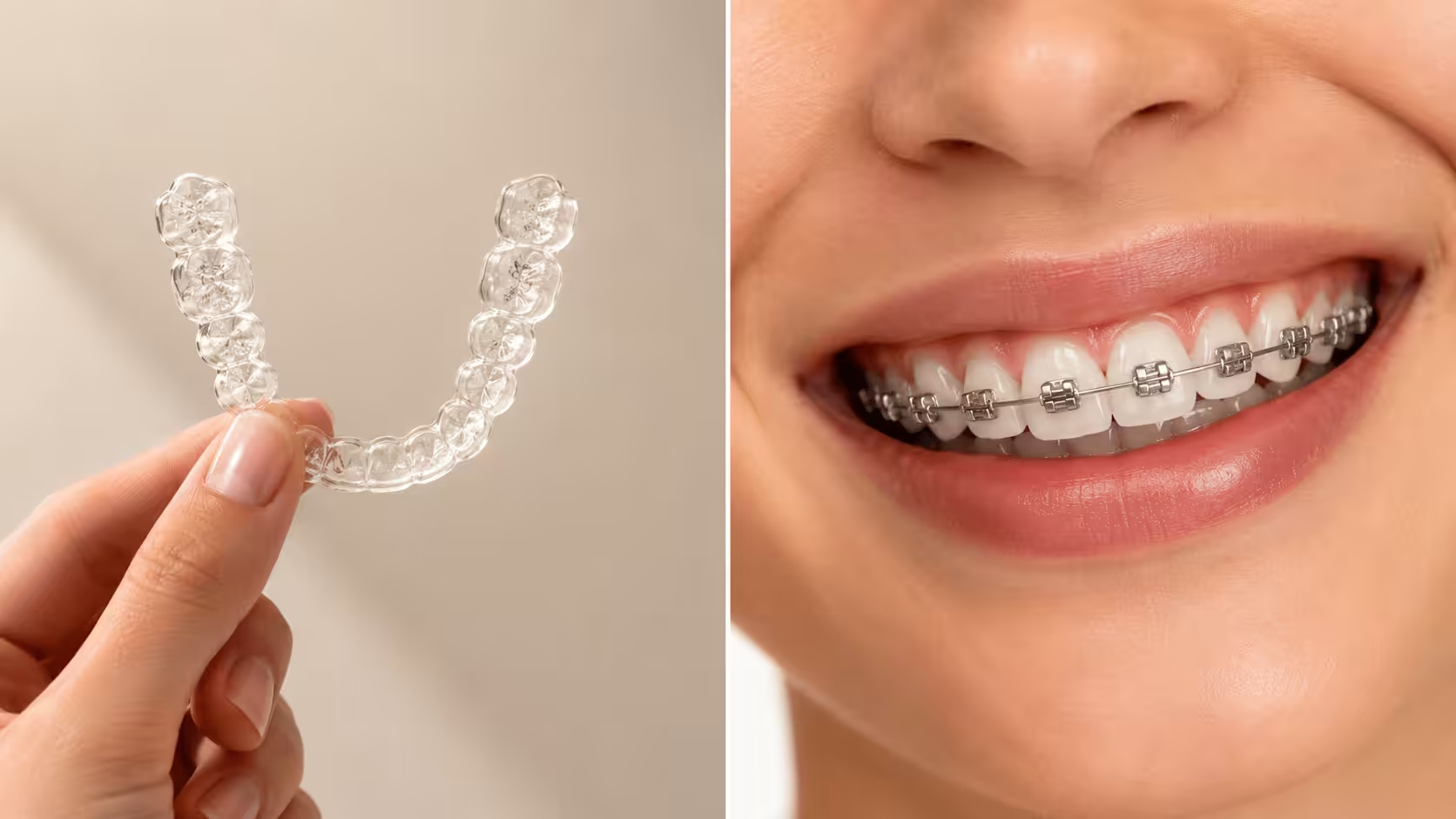
| Visibility | Visible metal | Nearly invisible |
| Removable | No | Yes |
Two cost wrinkles matter. First, insurance treats both the same, usually covering around 50% up to a lifetime orthodontic maximum, so the effective gap is often smaller than the sticker prices suggest. Second, Invisalign has a hidden cost braces don't: if you lose a tray, replacements run $200 to $400, though many offices include a free replacement or two. For a full local breakdown, see our guide to Invisalign cost in San Francisco.
How Long Does Invisalign Take?
Time in treatment is where Invisalign often pulls ahead, though it depends on your case.
Invisalign typically takes around 8 months to a year, while traditional braces usually run 18 to 24 months. Complex bite issues can push either treatment longer.
The part the marketing skips: Invisalign only works if you wear it 22 hours a day. Braces are fixed, so they work whether you cooperate or not. With Invisalign, taking the trays out too often is the number one reason treatment drags past its estimate. So the timeline advantage is real, but it's conditional on your discipline. If you know you'll leave them out, braces may genuinely finish faster for you.
You'll also see your dentist on a similar rhythm with both: roughly every four to six weeks for a check-in and your next set of aligners.
A nuance the comparison charts flatten: for mild to moderate cases, Invisalign's shorter timeline is real, but head-to-head clinical studies have found aligners and fixed braces finishing comparable cases within about a month of each other. So the timeline gap narrows the more complex your case gets, and your wear-time discipline matters more than the brand.

Does Invisalign Hurt?
The question everyone wants answered honestly. Invisalign causes mild pressure and soreness, but it generally hurts less than braces. There are no metal brackets or wires to rub against your cheeks and lips, which removes the most common source of braces irritation.
So what does the discomfort feel like? When you switch to a new set of aligners, your teeth feel sore and tight for the first two to three days, because the new tray is actively pushing them into a new position. That ache is the treatment working, not something going wrong. It fades as your teeth settle, then returns mildly with each new tray.
Why does Invisalign hurt at all? Because moving teeth requires force, and force on a tooth creates pressure on the surrounding bone and ligament. That's true of every orthodontic treatment ever invented. The difference is that Invisalign applies it gradually and without hardware digging into soft tissue. Over-the-counter pain relievers handle the worst of it, and switching to new trays at night lets you sleep through the most uncomfortable hours.
Invisalign vs Braces: Pros and Cons
A quick, honest scorecard before the verdict.
Invisalign pros: nearly invisible, removable for eating and big moments, more comfortable, easier to brush and floss, often a shorter timeline.
Invisalign cons: requires discipline (22 hours daily), can cost a bit more, easy to lose a tray, not ideal for the most severe cases.
Braces pros: usually cheaper, no discipline required since they're fixed, handle the most complex and severe cases reliably.
Braces cons: highly visible, can irritate cheeks and lips, harder to clean around, typically a longer timeline, dietary restrictions.
It nets out simply enough. Invisalign wins on lifestyle and comfort for mild to moderate cases. Braces win on cost and on severe, complex corrections.
Is Invisalign Worth It?
After the comparison, the real question: is Invisalign worth it for you?
For most adults with mild to moderate misalignment who'll actually wear the trays, Invisalign is absolutely worth it. The ability to remove it for a meal, a meeting, or a photo, combined with the near-invisibility, is the reason so many people who avoided braces for decades finally straighten their teeth. The comfort and the shorter average timeline are real bonuses, but the result is the part that lasts: a straight smile you bring to the date, the interview, and the wedding without a flicker of self-consciousness.
It's less worth it in two situations. If your case is severe and complex, braces may deliver a better, more reliable result, and your dentist will tell you so. And if you genuinely won't commit to wearing aligners 22 hours a day, you'll waste money watching your timeline stretch, and braces would serve you better. The real answer comes from an exam, where a dentist tells you which camp your bite falls into instead of defaulting to the pricier option.
Choosing What's Right for Your Smile
There's no universal winner in the Invisalign vs braces debate. The right pick comes down to your case, your budget, and your discipline. Mild to moderate misalignment plus a willingness to wear the trays points to Invisalign. A severe case or a tight budget can point to braces. With the costs, the timelines, and the real story on discomfort in hand, that conversation with your dentist gets a lot shorter. Straightening is also the first step in many smile makeovers, which our complete guide to cosmetic dentistry in San Francisco walks through.
Frequently Asked Questions
Is Invisalign cheaper than braces?
Usually no. Braces typically cost $3,000 to $7,000 and Invisalign runs $4,500 to $8,000, so braces are often slightly cheaper upfront. But the gap has narrowed, and insurance covers both the same way, around 50% up to a lifetime orthodontic maximum, which shrinks the effective difference.
How long does Invisalign take to work?
Invisalign typically takes around 8 months to a year. Braces usually run 18 to 24 months. Your teeth start shifting within the first few weeks, but Invisalign only works if you wear the trays 22 hours a day.
Does Invisalign hurt the first day?
Yes, mildly. When you start a new aligner, including the first one, your teeth feel sore and tight for two to three days as the tray pushes them into position. That soreness is the treatment working. It fades as your teeth settle and returns briefly with each new set of trays.
Why does Invisalign hurt?
Invisalign hurts because moving teeth requires force, which creates pressure on the surrounding bone and ligament. This is true of all orthodontic treatment. The discomfort is mild and short-lived, and Invisalign avoids the cheek and lip irritation that metal brackets and wires cause with braces.
Does Invisalign hurt less than braces?
Generally yes. Invisalign causes pressure and soreness like any treatment that moves teeth, but it has no brackets or wires to rub against and cut your cheeks and lips. Most patients report less overall discomfort with Invisalign than with traditional braces.
Is Invisalign worth it for adults?
For most adults with mild to moderate misalignment who'll wear the trays consistently, yes. The near-invisibility and the ability to remove it for meals and meetings make it ideal for professional life, and the result lasts. Severe cases or low compliance may be better served by braces.
Find Out Which One Fits You. The fastest way to know is an exam, not a comparison chart. Book a consultation at Skoulas DDS and Dr. Skoulas will assess your bite and tell you honestly whether Invisalign or braces will get you the best result, with clear pricing for each.
Invisalign in San Francisco: Cost and Monthly Payment Options
You want straighter teeth without a mouth full of metal, and you want the cost before you book anything. Fair enough. What you're really buying isn't the trays, it's the version of your smile you stop thinking twice about in meetings and photos. Most pages either dance around the number or quote a national average that has nothing to do with Bay Area pricing. So this page lays out the real 2026 cost of Invisalign in San Francisco, what the monthly payment actually looks like, and how Delta Dental coverage works, because that one detail can swing your out-of-pocket cost by thousands.
Whether you're an adult finally fixing what's bothered you for years or just comparing options, here's the honest financial picture.
How Much Is Invisalign in San Francisco?
The cost of Invisalign in San Francisco typically ranges from $4,500 to $6,500. That's a touch above the national range of $3,000 to $7,000, reflecting the Bay Area's higher cost of practice.
Where you land in that range depends mostly on how much your teeth need to move. A mild correction that takes a few months sits at the low end. A moderate case that runs over a year, with more aligner trays and more chair time, sits higher. The number your dentist quotes after an exam will be specific to your bite, not a guess from a chart.
One thing worth knowing: that price usually covers the full treatment, including all your aligner trays and your check-in visits. Confirm what's bundled, since a quote that leaves out visits or refinements is hiding a real cost.
What the Monthly Payment Looks Like
Almost nobody pays for Invisalign in one lump sum, and you don't have to either.
Most San Francisco practices offer monthly payment plans, typically landing between $150 and $300 a month depending on your down payment and how long your treatment runs. A larger down payment lowers the monthly figure. A longer treatment timeline spreads it further. Many offices structure the plan so your payments roughly track the length of your treatment, which makes it feel less like a loan and more like a subscription that ends when your smile is done.
The financing typically runs through third-party lenders like CareCredit that offer dental financing, sometimes with interest-free promotional windows. FSA and HSA funds can also be applied, which means paying with pre-tax dollars and effectively discounting the whole treatment.

Does Delta Dental Cover Invisalign?
This is the question that confuses everyone, so here's the clear version.
Yes, Delta Dental can cover Invisalign, but only if your specific plan includes orthodontic benefits. Delta Dental treats Invisalign exactly like braces, filing it under orthodontic treatment rather than cosmetic. So coverage comes down to your plan type.
In practice, coverage usually works like this:
- PPO plans often cover around 50% of Invisalign after a small orthodontic deductible, up to a lifetime orthodontic maximum that commonly falls between $1,000 and $2,000.
- The orthodontic maximum is separate from your annual maximum, and it's a lifetime cap, not an annual one. Once Delta Dental pays that amount, the rest is yours.
- In-network always saves more, since out-of-network reimbursement is lower.
A quick example. If your treatment costs $5,500 and your plan covers 50% up to a $2,000 lifetime ortho max, Delta Dental pays $2,000 and you cover the remaining $3,500, which you can then put on a monthly plan. Always verify your exact orthodontic benefit before you start, because plans vary widely.

Why Adult Invisalign Is Worth It
If you're an adult wondering whether it's too late, it isn't. Adult Invisalign is one of the most common treatments practices see now, and clear aligners are the reason. They're nearly invisible, removable for meals and meetings, and they fit around a professional life in a way metal braces never could.
The cost of adult Invisalign is generally the same as for teens, though adult cases can run slightly higher when the bite is more complex, since teeth and jaws have finished growing. The upside is that adult treatment is often more predictable for exactly that reason. For most adults with mild to moderate misalignment, the investment buys a result that shows up in every photo, every meeting, and every first impression for the rest of your life.
What Affects Your Final Price
Four things move your Invisalign number, and knowing them helps you read a quote.
- Case complexity: More movement means more trays and more time, which costs more.
- Treatment length: A six-month case costs less than an eighteen-month one.
- Your provider's experience: Experienced Invisalign providers may charge more, but case planning is where results are won or lost.
- Refinements: Confirm whether any mid-course adjustments are included.
The cheapest quote isn't automatically the best value. Invisalign results depend heavily on how well the treatment is planned, so the dentist matters as much as the price.
Why Patients Choose Skoulas DDS for Invisalign in San Francisco
Great Invisalign results come from precise planning, and that's exactly where Dr. Antigone Skoulas focuses. Treatment starts with a proper assessment of your bite and a clear, itemized quote, so you know what's included and what your monthly payment will be before you commit to anything.
You get itemized pricing, a clear monthly figure, and a treatment plan built around your actual smile goals. If cost or uncertainty has kept you from straightening your teeth, a consultation gives you the real numbers and a financing path that fits your budget.
Your Straighter Smile, Without the Guesswork
Invisalign in San Francisco is an investment, but between insurance, monthly plans, and pre-tax accounts, it's more reachable than the sticker price suggests. You now know the real cost, what the monthly payment looks like, and how to make your Delta Dental benefit work. The last step is a number built around your teeth. If you're still deciding between aligners and brackets, see how Invisalign compares to braces, or read our complete guide to cosmetic dentistry in San Francisco.
Frequently Asked Questions
How much is Invisalign in San Francisco?
Invisalign in San Francisco typically costs $4,500 to $6,500, slightly above the national range because of the Bay Area's higher cost of practice. Your exact price depends on how much your teeth need to move. The quote usually includes all aligner trays and check-in visits.
How much is Invisalign per month?
Most San Francisco practices offer monthly plans between $150 and $300, depending on your down payment and treatment length. A larger down payment or shorter treatment lowers the monthly figure. Financing comes through third-party lenders like CareCredit, and you can also use FSA or HSA funds.
Does Delta Dental cover Invisalign?
Yes, if your specific plan includes orthodontic benefits. Delta Dental treats Invisalign like braces. PPO plans often cover around 50% up to a lifetime orthodontic maximum, commonly $1,000 to $2,000. Always verify your exact ortho benefit before starting.
Is Invisalign more expensive for adults?
Adult Invisalign generally costs the same as treatment for teens, though complex adult cases can run slightly higher because teeth and jaws have finished growing. The upside is that adult treatment is often more predictable, and the result lasts a lifetime.
Is the Invisalign price all-inclusive?
Usually the quoted price covers the full treatment, including all aligner trays and check-in visits. Always confirm what's bundled, since a quote that leaves out check-in visits or mid-course refinements is hiding a real cost you'll pay later.
Can I use insurance and a payment plan together?
Yes. Insurance covers its portion first, then you can put the remaining out-of-pocket cost on a monthly payment plan. Combining a Delta Dental orthodontic benefit with third-party financing and FSA or HSA funds is how most patients make Invisalign affordable.
See What Invisalign Would Cost You. Book a consultation at Skoulas DDS for a clear assessment, an itemized quote, and a monthly payment option that fits your budget. We'll also help you understand exactly what your insurance covers.
Cosmetic Dentistry in San Francisco: The Complete Guide to Veneers, Implants, and Invisalign
Most people who fix their smile describe the same change, and it has little to do with teeth. They stop covering their mouth in photos. They laugh without
thinking about it. They walk into the meeting, the date, the wedding, and the smile is just there, not something they manage. That shift is what cosmetic dentistry
actually sells, and the procedures are how you get there. What follows is the whole landscape of cosmetic dentistry in San Francisco: every major treatment, what
each costs in 2026, how to choose between them, and how to find a cosmetic dentist in San Francisco who delivers natural results rather than an obvious set of
teeth.
Whether you have a single chipped tooth or you're planning a full smile makeover, you'll find the path that fits your case below.
In this guide
What Cosmetic Dentistry Covers
Cosmetic dentistry is the branch of dental care focused on improving the appearance of your teeth, gums, and smile, rather than only treating
disease. It includes teeth whitening, bonding, porcelain veneers, Invisalign, and dental implants. Some treatments are purely aesthetic, while others, like
implants, restore function and appearance at the same time.
The line between cosmetic and general dentistry isn't always sharp. A dental implant replaces a missing tooth (function) and rebuilds your smile (appearance).
Invisalign straightens teeth for looks and improves your bite. What sets a strong cosmetic result apart is artistry: shade matching, natural proportions, and a
result that looks like teeth that simply grew in well. That is why choosing the right cosmetic dentist matters as much as choosing the right procedure.
In San Francisco, demand for cosmetic work skews toward adults who want a polished, natural look that holds up under the city's professional and social scrutiny.
The treatments below are the ones that deliver it.
The Main Treatments at a Glance
Before going deep, here is how the major options compare. Use this to spot which treatments fit your situation, then read the detailed section for each.
| Treatment | Best for | Typical SF Cost | Timeline | How Long It Lasts |
|---|---|---|---|---|
| Teeth whitening | Surface stains | $400 to $1,000 | 1 visit | 6 months to 2 years |
| Dental bonding | Small chips, minor gaps | $1,200 per tooth | 1 visit | 10 years |
| Porcelain veneers | Stains, chips, gaps, shape | $2,000 to $3,000 per tooth | 2 to 3 weeks | 10 to 20 years |
| Invisalign | Crooked or gapped teeth | $4,750 to $6,750 | 6 to 18 months | Permanent with a retainer |
| Dental implants | Missing teeth | $4,500 to $6,000 per tooth | 3 to 6 months | Decades, often a lifetime |
Two patterns stand out. Whitening and bonding are the fast, low-cost entry points for minor concerns. Veneers, Invisalign, and implants are the investments that
change a smile structurally. Most full smile makeovers combine two or more of these.
Porcelain Veneers
Porcelain veneers are thin, custom ceramic shells bonded to the front of your teeth to correct staining, chips, gaps, and shape. They are the
workhorse of cosmetic dentistry because they fix several issues at once and look remarkably natural, lasting 10 to 20 years with good care.
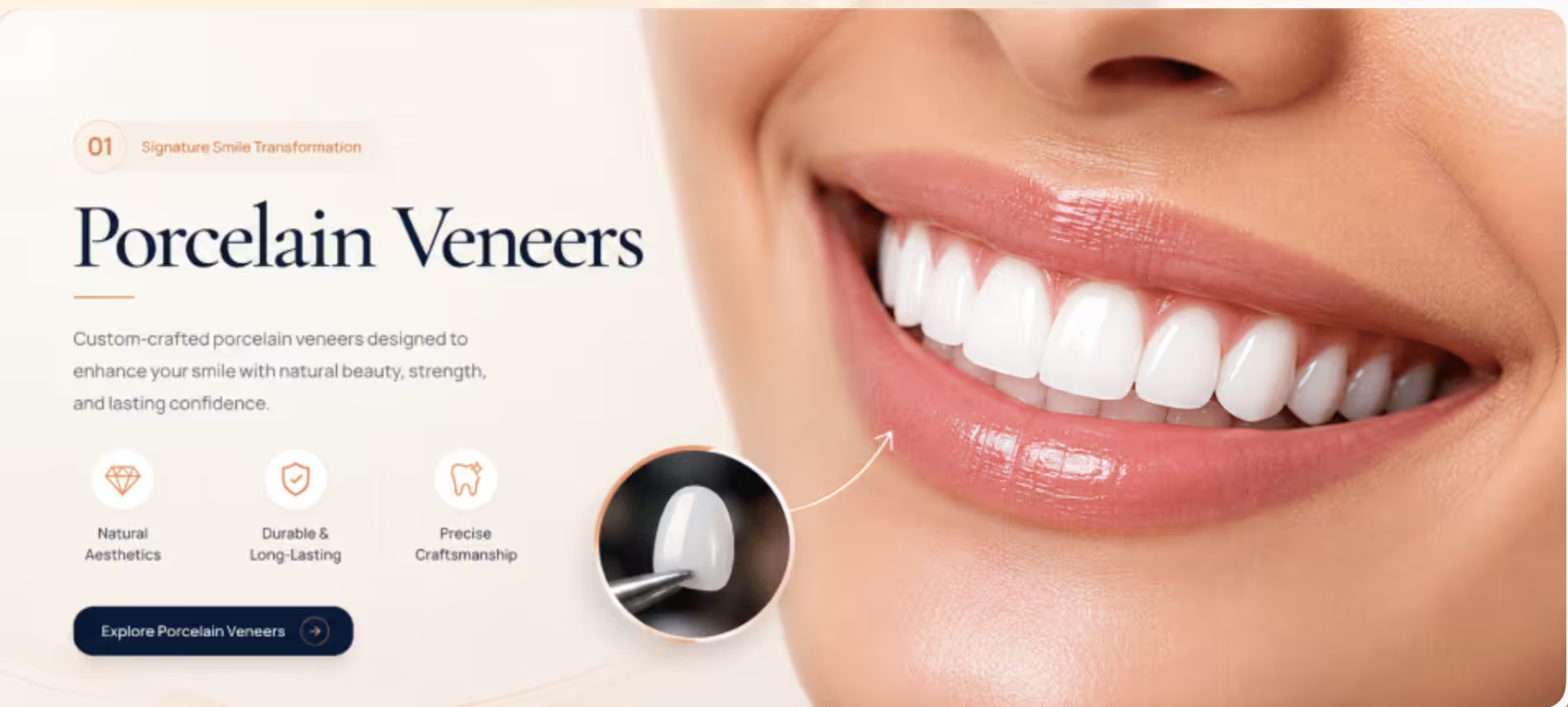
In San Francisco, porcelain veneers typically cost $2,000 to $3,000 per tooth, above the national range because the Bay Area carries the state's highest dental
overhead. A full smile of ten veneers runs roughly $20,000 to $25,000. Composite veneers cost less, around $1,200 per tooth, but stain faster and need replacing
sooner.
Veneers suit people with healthy teeth whose concern is appearance. They are not for structurally damaged teeth, which need crowns instead. For the full picture,
read our detailed guides on porcelain veneers in San Francisco and veneers vs crowns, or see the veneers service page.
Dental Implants
A dental implant is a titanium post placed in the jaw that integrates with the surrounding bone and supports a natural-looking crown, replacing a missing tooth. Because implants stimulate the jawbone in a way that traditional bridges and removable dentures do not, they can help preserve bone in the area of a missing tooth.

In San Francisco, a single implant typically costs $4,500 to $6,000, including the post, abutment, and crown. Full-arch implant-supported restorations may cost approximately $15,000 to $25,000 per arch, while full-mouth restoration may range from $30,000 to $90,000 depending on the treatment approach and number of implants required. If the jaw lacks enough bone, bone grafting may add to the cost and treatment timeline.
Beyond the clinical detail, implants give back the everyday things a gap quietly takes: biting into an apple, laughing in a group photo, speaking without a second
thought. Read more on dental implant costs and financing and implant pain, recovery, and longevity, or visit the implants service
page.
Invisalign and Teeth Straightening
Invisalign uses a series of clear, removable aligners to straighten teeth without metal brackets, typically over 6 to 18 months. It is the most
popular adult teeth straightening option because it is nearly invisible and removable for meals and meetings, fitting around a professional life in a way braces
never could.
In San Francisco, Invisalign typically costs $4,750 to $6,750, with most practices offering monthly payment plans between $150 and $300. Traditional metal braces
cost $3,000 to $7,000 and usually take 18 to 24 months, so they remain the better choice for severe or complex cases. The trade-off with clear aligners is discipline: they only work if worn 22 hours a day.
For most adults with mild to moderate misalignment, the result is a straight smile they bring to the date, the interview, and the wedding without a flicker of
self-consciousness. Compare the options in our guides on Invisalign in San Francisco and Invisalign vs braces, or see the Invisalign
service page.
How to Choose the Right Treatment
The fastest way to narrow your options is to start with the problem, not the procedure. Match your main concern to the treatment built for it.
- Stained or discolored teeth: Start with professional whitening. If stains are permanent or deep, veneers cover what whitening can't.
- Small chips or minor gaps: Bonding is the cheapest fix. Veneers are the longer-lasting upgrade.
- Crooked or crowded teeth: Invisalign for mild to moderate cases, braces for complex ones.
- A single missing tooth: A dental implant, which protects the jawbone and stands alone without affecting neighboring teeth.
- Multiple or all missing teeth: Implant-supported bridges or full-arch implant restorations.
- Multiple issues at once: A combined smile makeover, often Invisalign first to align, then veneers to perfect.
The honest truth most marketing skips: the right treatment is sometimes the cheaper one. A good cosmetic dentist will tell you when whitening and
bonding would solve your concern for a fraction of the cost of veneers, rather than defaulting to the most expensive plan. That candor is one of the clearest signs
you've found the right practice.
What a Smile Makeover Costs in San Francisco
This is the question that stops most people before they start, so here is a straight overview.
A smile makeover in San Francisco can range from under $1,000 for whitening to over $60,000 for a full set of porcelain veneers or full-arch
implants. The number depends entirely on which treatments you combine and how many teeth are involved. There is no single price, but there are reliable
ranges.
San Francisco treatment costs can vary based on the procedure, materials, laboratory work, case complexity, and the dentist's training and experience. For detailed pricing, each treatment guide above breaks down the numbers for its procedure.
Paying For It: Insurance and Financing
Cost rarely has to be paid all at once, and that changes what is realistic for most people.
Most dental insurance plans treat purely cosmetic procedures, such as veneers and whitening, as elective and may not cover them. Coverage for dental implants and orthodontic treatment varies by plan, benefit limits, and individual circumstances. Patients should confirm their specific benefits with their insurance carrier before beginning treatment.
For costs not covered by insurance, financing options may help make treatment more manageable. Depending on availability and eligibility, patients may use third-party healthcare financing, payment options, or eligible FSA or HSA funds. Our team can review available options during your consultation.
Combining Treatments for a Full Smile Makeover
The most complete results often come from sequencing treatments rather than choosing just one. This is where an experienced cosmetic dentist earns their fee.
A common sequence: straighten first, then perfect. If your teeth are misaligned, placing veneers on crooked teeth only masks the problem. Many
dentists recommend Invisalign first to position the teeth correctly, then veneers or whitening to finish the look on a properly aligned smile. Similarly, an implant
to replace a missing tooth might be paired with veneers on the neighboring teeth so the whole smile matches in shade and shape.
Combining treatments takes planning and a clear timeline, which is exactly why the consultation matters. The goal is a smile that looks intentional and natural,
not a set of mismatched fixes done in isolation.
How to Choose a Cosmetic Dentist in San Francisco
The result of cosmetic work lives on your face, so the choice of dentist matters more than almost any other decision in the process. A few markers separate a
strong cosmetic dentist in San Francisco from an average one.
- Training and accreditation: Look for membership in bodies like the American
Academy of Cosmetic Dentistry, which signals advanced cosmetic training. - A real portfolio: Before-and-after photos of actual patients, especially cases like yours, tell you more than any marketing copy.
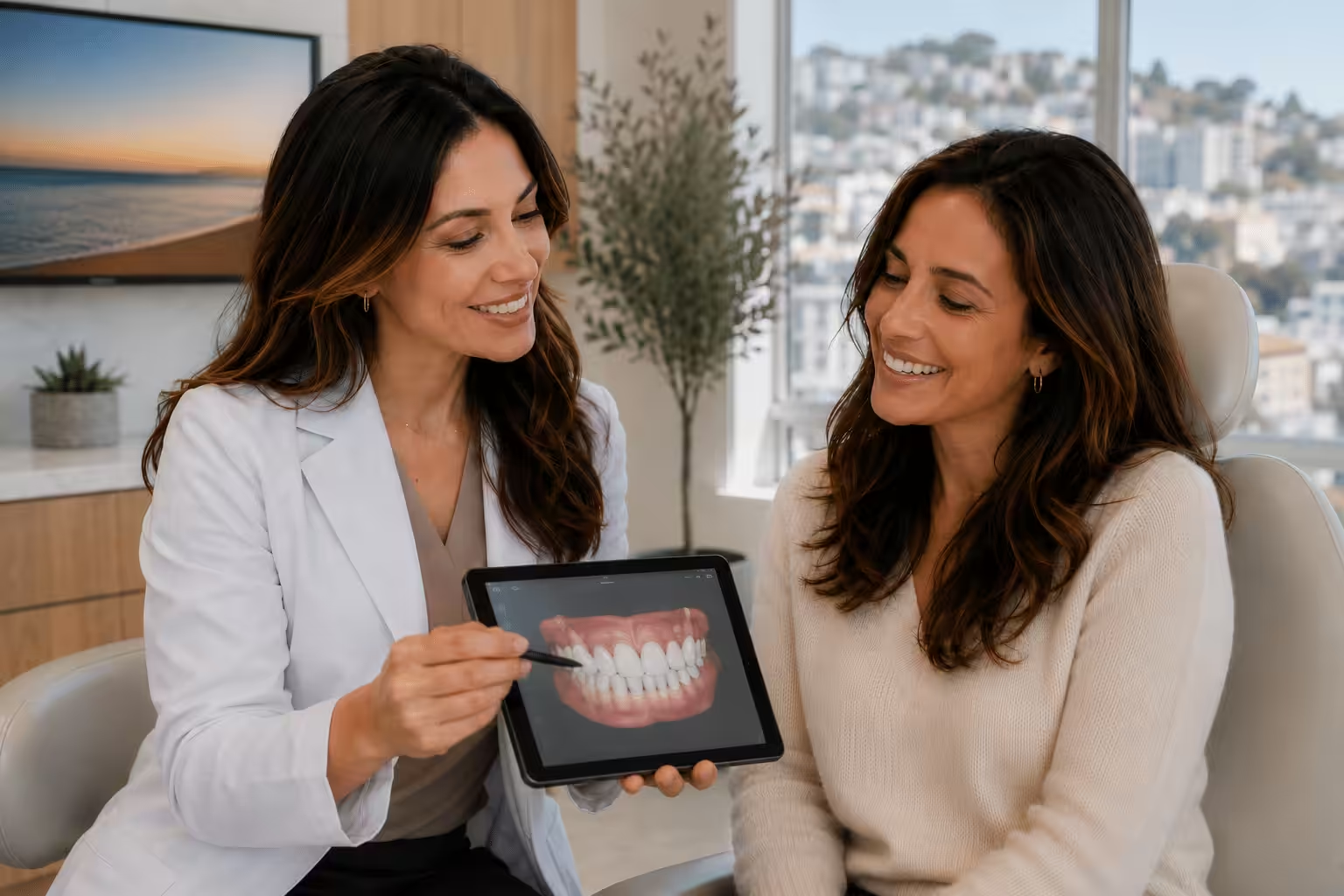
- Digital previews: Practices that show you the result before treatment, using digital design or a wax mock-up, remove the guesswork.
- Honest options: A dentist who recommends the conservative treatment when it fits, rather than upselling, is one you can trust with the bigger
work. - Transparent pricing: A clear, itemized quote up front, not a vague phone estimate, is a basic sign of a well-run practice.
At Skoulas DDS, Dr. Antigone Skoulas brings a detail-focused, design-led approach to cosmetic dentistry in the heart of San Francisco, pairing modern techniques with advanced training in aesthetic and restorative dentistry. A graduate of the Kois Center, she combines clinical planning with careful attention to shape, proportion, and natural-looking results. Every plan starts by listening to what you want and discussing the treatment options appropriate for your smile.
Your Smile Makeover Starts With One Conversation
Cosmetic dentistry in San Francisco offers a clear path for almost any concern, from a quick whitening to a full transformation with veneers, Invisalign, and
implants. You now have the full landscape: what each treatment does, what it costs in 2026, how to choose, and what to look for in a cosmetic dentist. The one step
that turns all of this into a plan is an exam built around your actual smile.
Frequently Asked Questions
What is the difference between cosmetic and general dentistry?
General dentistry focuses
on oral health, preventing and treating disease like cavities and gum problems. Cosmetic dentistry focuses on the appearance of your teeth and smile, including
whitening, veneers, Invisalign, and implants. Many treatments overlap, since implants and Invisalign improve both function and appearance at the same
time.
How much does a smile makeover cost?
A smile makeover ranges from under $1,000 for
whitening to over $60,000 for a full set of porcelain veneers or full-arch implants. The cost depends on which treatments you combine and how many teeth are
involved. In high-cost cities like San Francisco, prices sit at the upper end of national ranges.
How much does a smile makeover cost in San Francisco?
In San Francisco, a smile makeover
typically runs from $400 to $1,000 for whitening, $20,000 to $25,000 for a full veneer makeover of ten teeth, and $15,000 to $25,000 per arch for full-arch
implants. Most practices offer monthly financing to spread the cost.
What is the most popular cosmetic dental procedure?
Teeth whitening is the most common
because it is fast and affordable, but porcelain veneers are the most requested for a lasting transformation. For adults wanting straighter teeth, Invisalign is the
most popular option because it is nearly invisible and removable.
How do I choose between veneers, implants, and Invisalign?
Match the treatment to the
problem. Veneers fix the appearance of healthy teeth, covering stains, chips, and gaps. Implants replace missing teeth. Invisalign straightens crooked or crowded
teeth. Many people combine them, often straightening with Invisalign first, then refining with veneers.
Can you combine Invisalign and veneers?
Yes, and it is a common sequence for the best
results. Invisalign positions misaligned teeth correctly first, then veneers perfect the shape and shade on a properly aligned smile. Placing veneers on crooked
teeth without straightening first only masks the misalignment.
Does insurance cover cosmetic dentistry?
Purely cosmetic procedures such as veneers and whitening are often not covered because insurers may classify them as elective. Coverage for dental implants and Invisalign varies considerably by plan, benefit limits, and individual circumstances. Always confirm your specific benefits with your insurance carrier.
How do I choose a cosmetic dentist in San Francisco?
Look for advanced cosmetic training
or accreditation, a real before-and-after portfolio of cases like yours, digital previews that show results before treatment, transparent itemized pricing, and a
dentist who recommends conservative options when they fit rather than upselling.
Is cosmetic dentistry worth it?
Whether cosmetic dentistry is worth it depends on your goals, treatment needs, budget, and the procedures you are considering. For many patients, improving concerns about tooth color, shape, spacing, or alignment can make them feel more comfortable and confident with their smile.
How long does a smile makeover take?
It depends on the treatments. Whitening and bonding
take a single visit. Veneers take two to three weeks. Invisalign takes 6 to 18 months. Implants take three to six months to heal before the final crown. Combined
makeovers run on the longest treatment in the plan.
What is the cheapest way to improve my smile?
Professional teeth whitening is the most
affordable cosmetic treatment, often $400 to $1,000, and it makes a noticeable difference for surface staining. Dental bonding is the cheapest fix for small chips
and gaps. Both are good entry points before considering veneers.
Are cosmetic dental procedures painful?
Most cosmetic dental procedures are designed to minimize discomfort, although individual experiences vary. Whitening can sometimes cause temporary sensitivity, while veneers and implant treatment may involve local anesthetic and short-term discomfort afterward. Invisalign patients may also notice temporary pressure or soreness when changing aligners.
Can teeth straightening options work for adults?
Yes. Adult teeth straightening is one
of the most common treatments now, with Invisalign leading because it is discreet and removable. Adult cases can be slightly more complex than teen cases since the
jaw has finished growing, but treatment is often more predictable for the same reason.
How long do cosmetic dental results last?
Longevity varies by treatment and by patient. Whitening results may last months or longer depending on habits and maintenance. Bonding and porcelain veneers may last for many years with proper care, while dental implants are designed as a long-term tooth replacement option. Invisalign results can be maintained with consistent retainer use after treatment.
Cosmetic dentistry is one of the most commonly requested types of dental treatment. Why is this? Cosmetic dentistry is not covered by insurance, so the cost of these procedures is completely out of pocket in most cases. Why are patients investing in cosmetic dentistry? Here are the top 3 reasons.
1.To Look Younger.
Cosmetic dentistry can give you a more youthful appearance. Teeth whitening, veneers, gum contouring, and other cosmetic procedures can refresh your smile to help you look younger. Teeth naturally become more yellow and develop gaps as the gums recede, making teeth look long and weathered. Cosmetic improvements can make your smile look years younger and more like it used to be.
2.To Feel More Confident.
Making improvements to your smile can give you new confidence you didn’t have before. If you’ve ever been afraid to smile because you feel self-conscious about your teeth, you are an excellent candidate for cosmetic dentistry. Confidence can change your life in positive ways, helping you build personal and professional relationships. Cosmetic dentistry may give you the confidence to pursue a new romance or a job promotion. An investment in cosmetic dentistry is an investment in your future.
3.To Improve Your Overall Oral Health.
Many cosmetic procedures also have oral health benefits. Invisalign, dental crowns, dental implants, bridges, and dentures all improve your smile while restoring dental function. Invisalign straightens your teeth and aligns your bite, making it easier to keep your teeth clean and preventing premature wear of the teeth. A dental crown covers a damaged tooth, allowing the natural root to stay in place. Dental implants, bridges, and dentures all replace missing or damaged teeth in a way that looks and functions naturally.
Cosmetic Procedures
The following cosmetic procedures are designed to enhance your smile:
- Teeth whitening. Professional teeth whitening treatments are effective and gentle to give you a brighter smile without damaging your teeth.
- Veneers. Conceal imperfections in your teeth with veneers, thin porcelain plates that attach to the front side of your visible teeth.
- Invisalign. Straighten your teeth and close gaps with Invisalign clear aligners.
- Gum contouring. Reshaping gum tissue can provide a more natural looking smile while reducing the risk of gum disease and tooth decay.
- Dental prosthetics. Teeth that are missing or too damaged to be saved can be replaced with dental prosthetics to provide a complete and functional smile.
Frequently Asked Questions About Cosmetic Dentistry
How long does teeth whitening last?
The results of professional teeth whitening treatment can last anywhere from 1 to 3 years. You can maintain your results for longer when you do periodic touch ups at home, and avoid typically teeth staining foods and beverages, such as coffee, tea, red wine, and dark berries.
Are veneers permanent?
Veneers are fixed to the teeth so that they can only be removed by your dentist. A special type of adhesive is used to hold them securely to your teeth so you can eat and brush your teeth like you normally would.
Why Invest in Cosmetic Dentistry at Skoulas DDS?
At Skoulas DDS we provide smile makeovers and full mouth reconstruction, which may include a combination of cosmetic treatments and procedures. Our goal is to improve the appearance and the health of your teeth for a natural smile that looks as good as it feels. We accept a variety of payment options and can recommend credit options to make the cost of cosmetic dentistry more affordable. Dentistry for everyone. Dentistry with care.
Call 415-757-0110 or contact us today to learn more and schedule an appointment.
Antigone Skoulas DDS - Best Cosmetic Dentist in San Francisco